Empathy Combined With Embodied Power is Medicine Because Your Capacity to Care also includes the Capacity to Act on Your Own Behalf
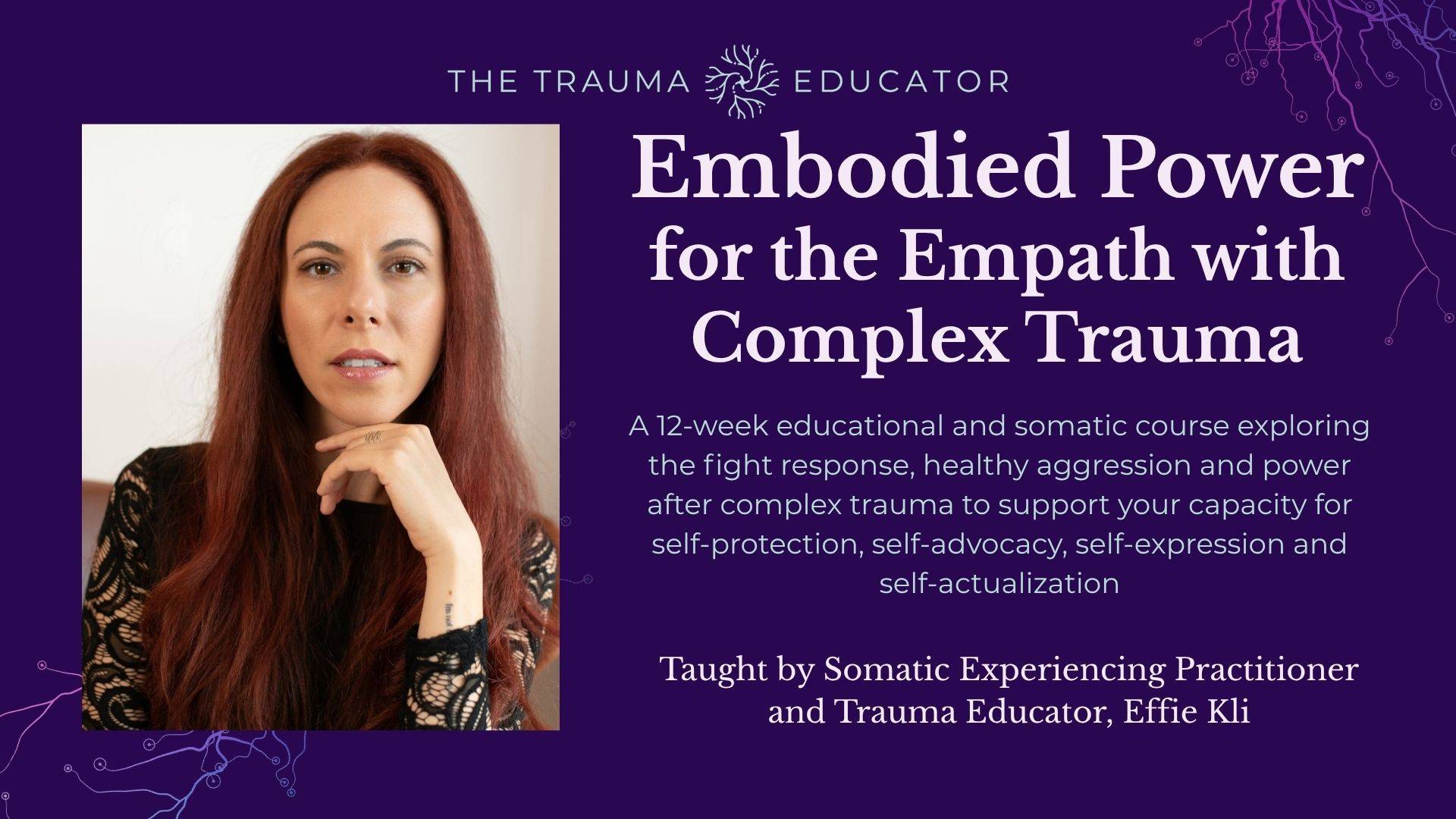
EMBODIED POWER is a 12-week educational and somatic course for empaths with complex trauma. Together, we will explore the fight response, healthy aggression and power to support self-protection, self-advocacy, self-expression and self-actualisation: your capacity to trust yourself, choose, use your voice, create and commit to the paths that matter to you.
Course begins October 28, 2026
If you are an empath with complex trauma, understanding yourself and others is not enough to be able to act on your own behalf.
You might know why you struggle to say 'no', question your judgement, hold back your voice or abandon what you want when someone else wants something different. You might understand that you have the right to protect yourself, express yourself and choose your own direction.
Yet, still, when it is time to act, fear silences you, guilt pulls you back, shame makes you want to disappear, and the possibility of disappointment makes giving up feel safer than committing.
You spend so much of your life understanding, accommodating and responding to others that there is little room left to discover what you want to protect, express, create or become.
EMBODIED POWER is for this place on your healing journey: when you want your understanding to become a lived capacity to return to YourSelf and reclaim your place in the world through decision, choice, action and follow through.
Together, we will work with what makes power difficult to access and use after complex trauma, developing the embodied foundations for both standing up for yourself and bringing more of yourself into your life, your relationships and the world.
Why Embodied Power Matters after
Complex Trauma

Complex trauma probably taught you that having power puts your safety, belonging or relationships at risk. Protecting yourself might have brought punishment, speaking up might have led to ridicule, or expressing your individuality might have threatened the connection you depended on.
For an empath, this can become a way of living in which you understand other people’s needs, feelings and motivations while struggling to give your own the same significance.
The fight response, healthy aggression and power are closely connected. The fight response supports your capacity to resist threat and defend your boundaries. Healthy aggression is the mobilising energy that helps you stand your ground, move towards what matters and persist through difficulty. Power is your capacity to use your resources, choices and actions to influence your life.
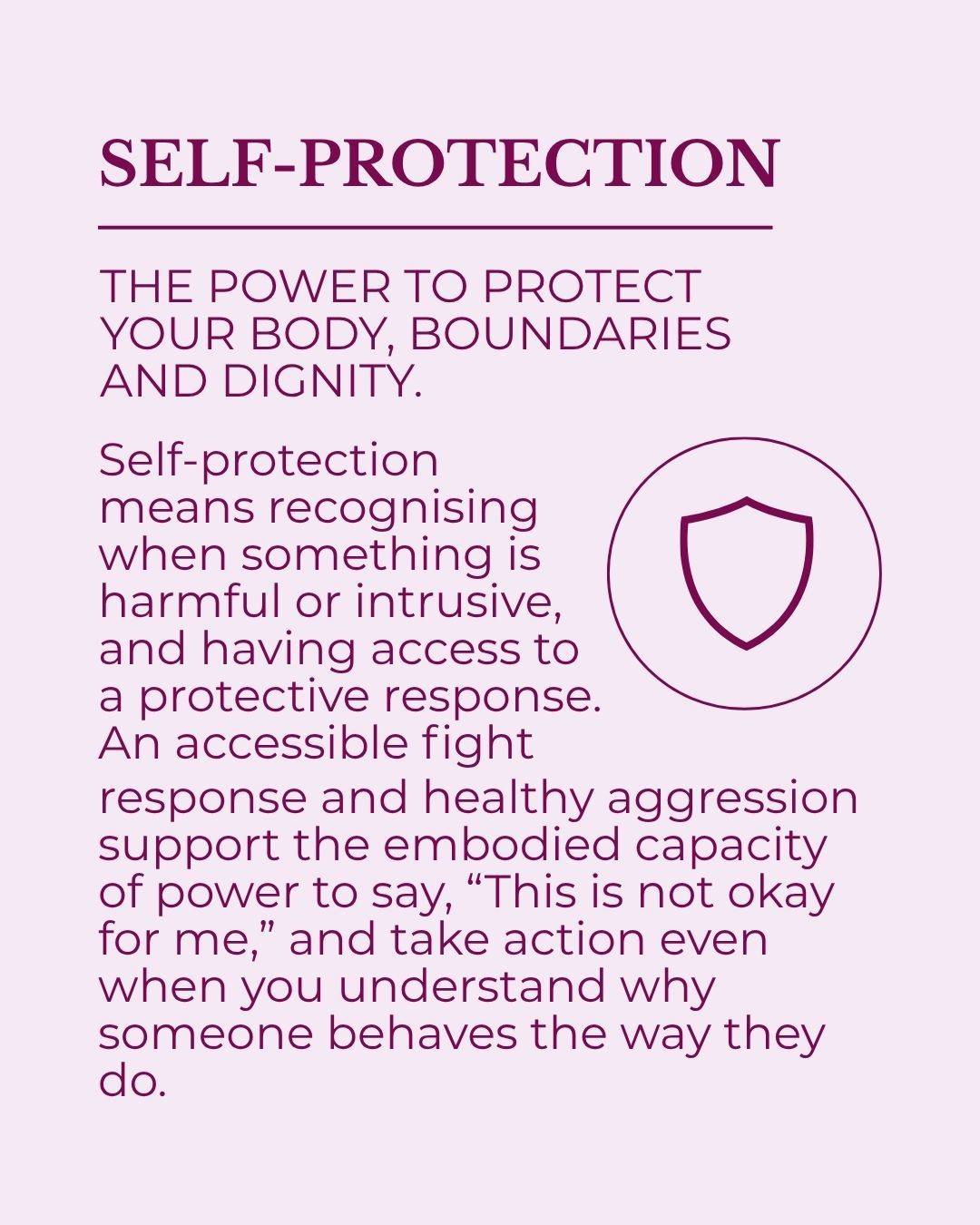
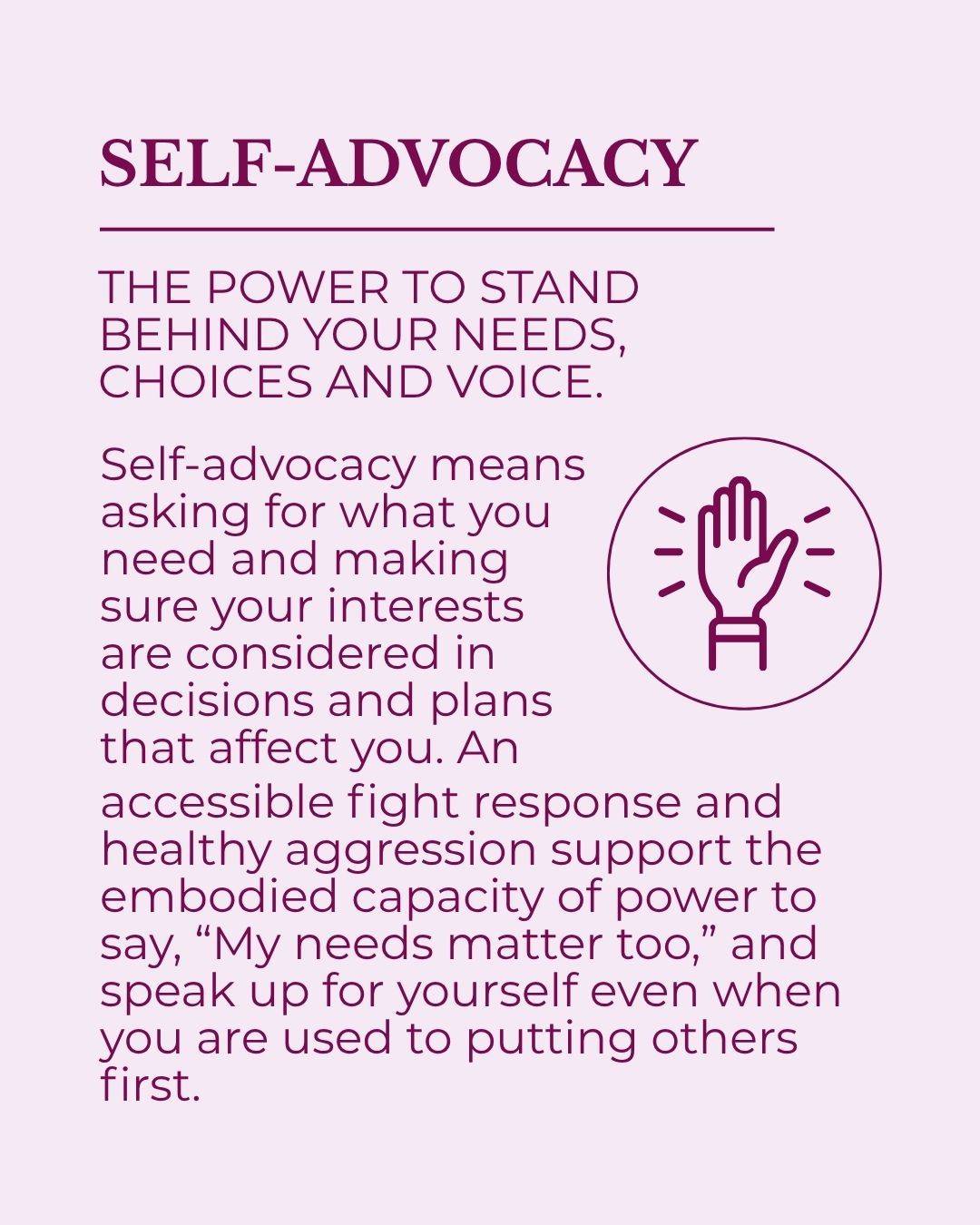
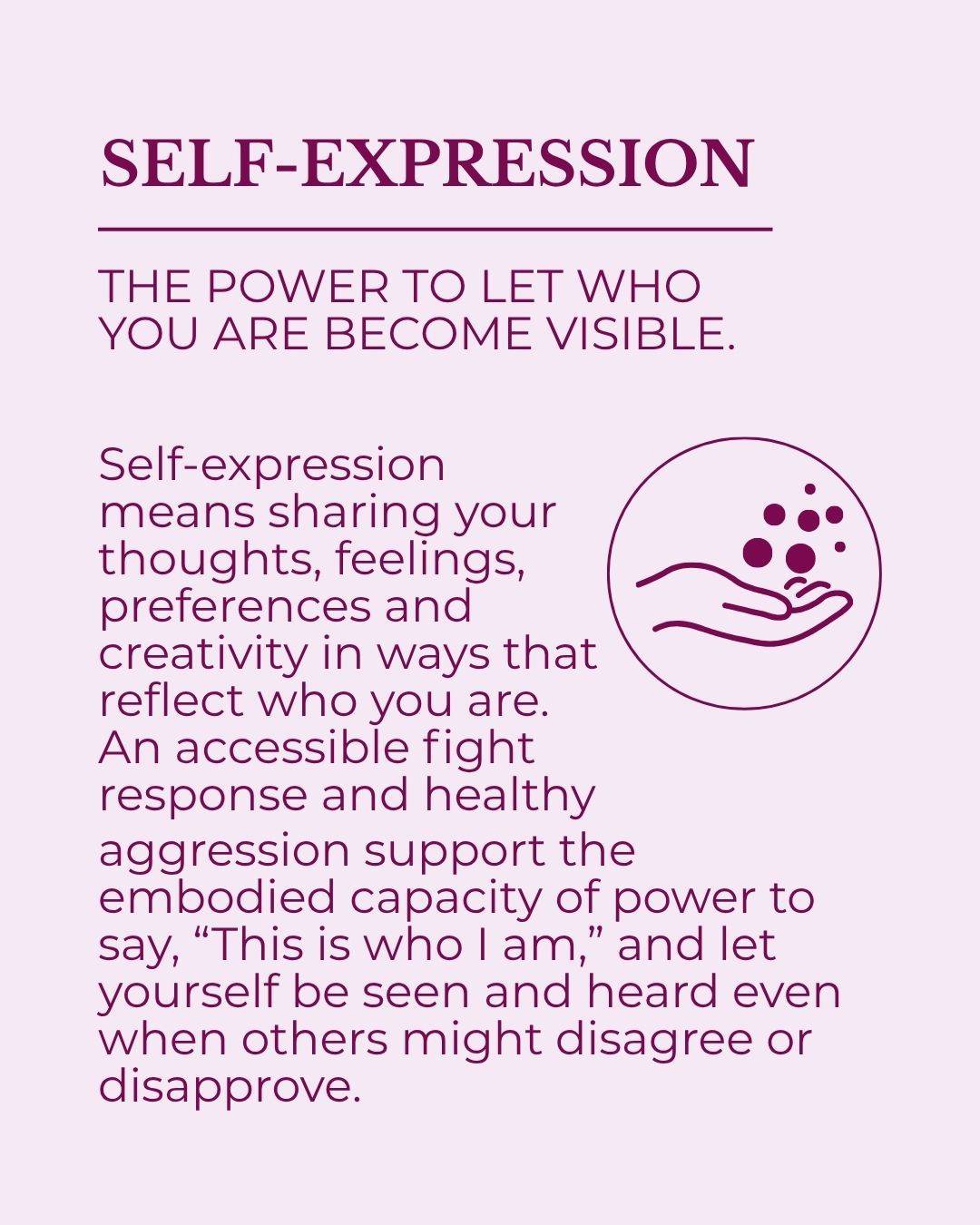
Together, they support four essential capacities: self-protection, self-advocacy, self-expression and self-actualisation.
The 4 Pillars of Embodied Power
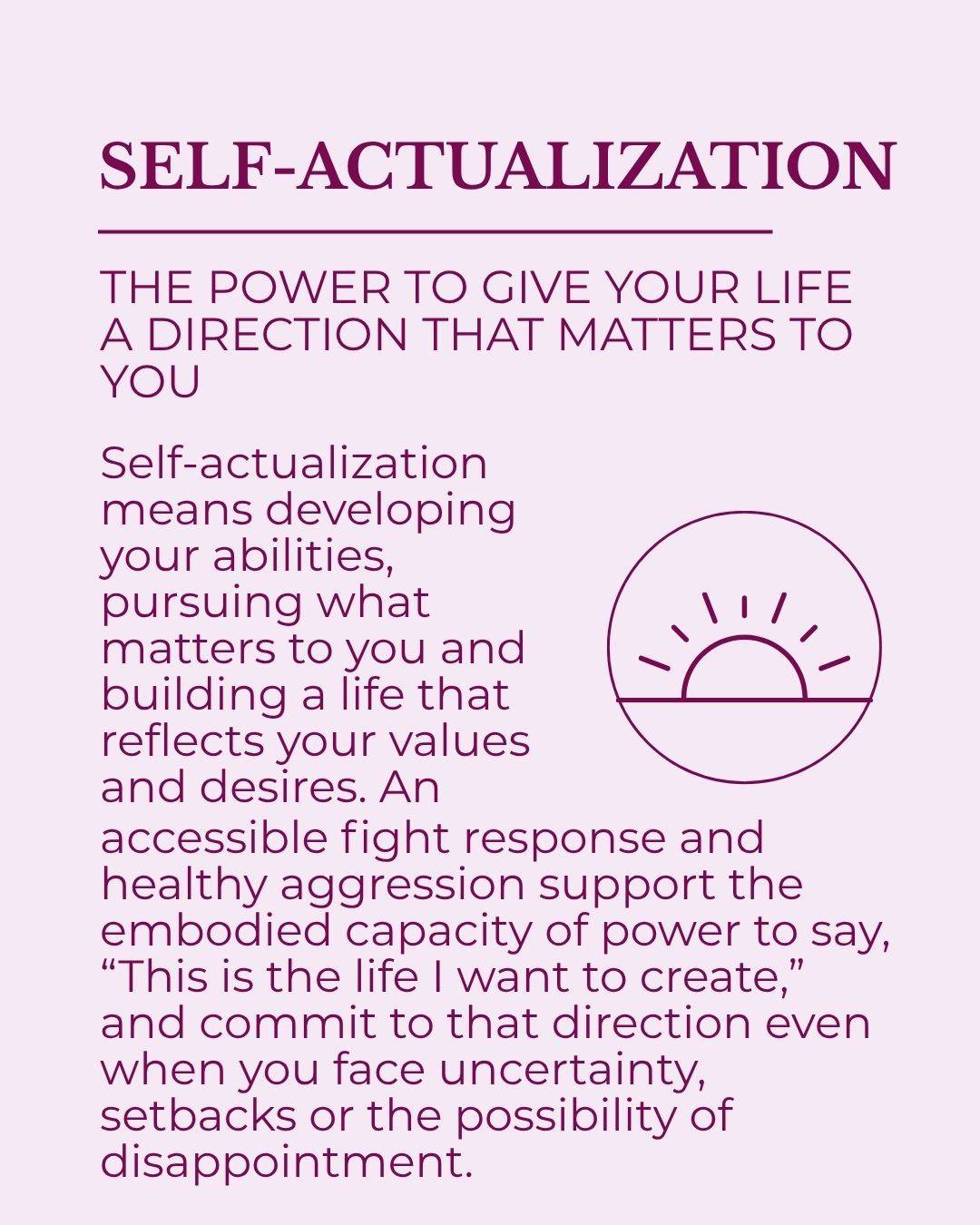
These capacities develop together.
- Protecting yourself creates room for expression
- Advocating for your needs gives your choices more influence
- Expressing yourself helps you discover what’s important to you
- Committing to your desired direction gives you something worth protecting
Across 12 weeks, EMBODIED POWER will explore the somatic, emotional and relational experiences that shape these capacities after complex trauma, helping you bring empathy and power into any relational dynamic that includes you.
The Structure
Fight Response Styles After Complex Trauma
We begin by exploring how complex trauma can shape the nervous system’s fight response. You will learn to recognize the different fight response styles in your own nervous system, whether it’s inhibited fight—when protective or mobilising energy becomes inaccessible— or it’s disembodied fight, when that energy is expressed without enough choice, integration, flexibility or regulation. You will understand all of them adaptations and, by bringing awareness to these patterns, you will begin to make sense of your body’s fight response.
Fear, Anxiety and Terror
Power and action often bring us into contact with fear. This week explores how anxiety and terror can interrupt choice, movement and self-expression, particularly when present-day action touches earlier experiences of danger. We will work with fear, anxiety and terror without making fearlessness the goal, building the capacity to remain in relationship with yourself while taking meaningful action and steps.
Shame, Guilt and Despair
For many people with complex trauma, using power activates shame: Who do I think I am? Guilt can also show up when you choose yourself, disappoint another person or stop performing an expected role, while espair can make action feel pointless before it begins. We will explore these experiences as powerful inhibitors of healthy aggression and practise responding to them without allowing them to determine every choice.
Grief, Rage and Disgust
Reclaiming power can uncover grief for what was lost, rage about what should never have happened, and disgust that protects you from what violates your dignity or values. This week creates room to understand these emotions without romanticising or fearing them. We will explore how their energy and information can support protection, individuation, mourning and movement.
Power and the Self
What do you believe power says about who you are? Do you experience it as selfish, unsafe, excessive or unavailable to someone like you? This week examines your internal relationship with power: the ways you inhibit it, hand it away, turn it against yourself or wait for permission to use it. We begin defining a form of power that is congruent with your values and your sense of self.
Power and Our Relationships
Power exists in every relationship, whether it is acknowledged or not. We will explore power, responsibility, repair, influence, hierarchy, mutuality and difference, along with what happens when empathy becomes self-erasure or when connection appears to require submission. This week supports a more relational form of power: one that can hold both your experience and another person's without treating either as the whole truth.
Power and the World
Our relationship with power is shaped not only within families but through culture, gender, race, institutions, communities and wider systems. This week places personal patterns within their broader context. We will explore the difference between taking responsibility for your life and pretending that every condition is individually chosen, while considering how you want to participate, contribute and locate yourself within the world around you through your own embodied power.
Agency, Choice and Action
Agency is not total control. It is the capacity to recognise where choice exists and use it. We will explore why decisions can feel dangerous, why endless analysis can become protection from vulnerability, and why action often needs to be taken before complete certainty arrives. This week focuses on strengthening your capacity to choose, act and respond to what unfolds next, not just intellectually, but somatically too.
Self-Trust, Intuition and Discernment
Self-trust is not the belief that you will always be right. It is the belief that you can remain in relationship with yourself as you perceive, decide, act, learn and repair. We will explore the difference between intuition and trauma-driven urgency, between discernment and hypervigilance, and between seeking perspective and surrendering your authority to other people.
Self-Protection, Self-Advocacy and Voice
This week brings embodied power into direct communication and action. We will explore recognising limits, expressing needs, standing behind your words, tolerating other people's responses and using your voice without needing to justify your existence. The focus is not on perfect scripts, but on increasing your capacity to remain present to yourself while you protect and use your voice for what’s important to you.
Self-Expression, Self-Actualisation and Creativity
Power is also generative as it helps you bring into the world what exists within you. We will explore the trauma-shaped fear of visibility, judgement, envy, failure and success, and the ways adaptation can narrow who you allow yourself to become. This week invites your originality, creativity and desire into the work as expressions of your life-force energy.
Commitment, Purpose and Direction
We close by exploring the power required to choose a direction and continue participating in it. Commitment creates vulnerability because it reveals what matters to you and makes disappointment possible. This week brings together healthy aggression, power, and purpose so that you can relate differently to obstacles, uncertainty and the ongoing practice of committing through direction and action to what matters to you.
This is for you if:
- You are an empath with a history of complex trauma, and understanding others often comes at the expense of standing up for yourself.
- You learned that keeping connection meant giving up parts of yourself.
- You know your rights intellectually, but struggle to act on them.
- Your anger is difficult to access or difficult to use.
- Fear, guilt or shame can take over when you begin to choose yourself.
- Power feels complicated because of how you have experienced it.
- You often give other people’s opinions more weight than your own experience.
- You want relationships in which your needs, preferences and decisions have room to exist.
- You hold back parts of yourself because being visible feels exposing.
- You have desires and ideas that repeatedly remain on hold.
- You want your healing to include more of your life.
This course is not psychotherapy, crisis support or a substitute for individual mental-health treatment. This course is educational and experiential. You remain responsible for deciding whether participation is appropriate for you and for seeking individual professional support where needed.
What's Included:

Twelve Live Calls with Replays
The calls will be organised around the full curriculum of power, healthy aggression and the fight response for empaths with complex trauma
Dates:
Wednesday October 28: Fight Response Styles After Complex Trauma
Wednesday November 4: Fear, Anxiety and Terror
Wednesday November 11: Shame, Guilt and Despair
Wednesday November 18: Grief, Rage and Disgust
Wednesday November 25: Power and the Self
Wednesday December 2: Power and Our Relationships
Wednesday December 9: Power and the World
Wednesday December 16: Agency, Choice and Action
December 23rd & 30th: Two-week Break
Wednesday January 6: Self-Trust, Intuition and Discernment
Wednesday January 13: Self-Protection, Self-Advocacy and Voice
Wednesday January 20: Self-Expression, Self-Actualization and Creativity
Wednesday January 27: Commitment, Purpose and Direction
All classes will start at 5pm GMT / 12pm EDT / 9am PDT, and will last for approximately 90 minutes.
Please note: From the beginning of November onwards, there may be a one-hour difference depending on your location due to daylight saving time changes.

Somatic Practices and Guided Explorations
to help you bring the material into relationship with your nervous system and lived experience
Twelve Somatic PDF Processes
After each call, you will receive a practical somatic PDF process connected to the weekly themes. These processes are designed to help you continue practising between sessions and bring the work into your daily life during and after the course ends.

Private Community
You will have access to a private community space where you can reflect, share, ask me questions, and stay connected to the course process.

1 Year of Access
You will have one year access to the replays, so you can revisit the teachings and practices at your own pace.
About Me
Effie Kli is a trauma-trained somatic coach and educator with extensive training in somatics, the nervous system, and trauma, and over eight years of experience supporting clients privately and in groups. Her credentials include training as a Somatic Experiencing® Practitioner, Compassionate Inquiry (the somatic-based psychotherapeutic approach developed by Dr. Gabor Maté for healing trauma), the Polyvagal Certificate Course, and a High Performance Coaching Certificate — forming a rigorous, multi-disciplinary foundation for her work. Her holistic approach is informed by science-backed psychology and neuroscience, by the understanding that body and mind are one system, and by what she sees her clients benefit from as she supports them with the processing of trauma and repressed emotions stored in their bodies.
For two decades she lived with cPTSD, and one thing she's seen proven inside her practice and through her own personal change is that our body always guides us towards healing.
In her work and teachings, Effie is not interested in pathologising symptoms and pain because these are our body's way of talking to us. Instead of shaming those experiences, a paradigm shift of healing is to learn to apply compassionate curiosity and learn to speak our body's language so that trauma gets resolved sustainably.





"Effie's course has been life changing for me. I decided to join because of her philosophy, her story and because I felt that she'd 'get' me. She broke down complex information so it was understandable, gave me tools to support myself with my cPTSD, anxiety and depression, and she offered persistent and reliable guidance. There has been such a transformation for me and I'm in a totally difference place compared to where I was before."
Corina Ebnother
"Effie showed me how to re-connect with my body, to feel my feelings, and how to listen to them. She challenged me to see the past and myself without the shame, and soon it became clear to me that there wasn’t anything wrong with me’. She helped me get to the core of my problem, gave me tools to transcend it, and techniques to help me feel and release emotions I used to shut down out of fear. She truly helped me feel ‘whole’ again."
Dave Cooke
Your Investment
"Your guidance has helped me immensely. I feel my emotional, mental and physical situation has improved a lot, and it happened in the best moment in my life. In certain ways my whole mindset shifted and I learnt a new approach. It works! I will use the methods you taught us. Thank you for being a devoted, genuine, motivating, sensitive and warm-hearted human being."
Szilvia Frank
"I feel that the biggest part of not feeling worthy and feeling inadequate has been healed through working with Effie."
Lili Suke
"Effie’s ability to get to the truth of the matter and create a path to a different way of seeing myself has been life changing."
Susannah Barrie
Your Questions Answered
What happens after I sign up?
What if I can't attend live?
Is this therapy?
Do I need previous experience with somatic work?
What is the schedule of the live calls?
What is the refund policy?
Reclaim YourSelf and Your Place in the World
Your empathy does not have to come at the expense of your protection, your voice or the life you want to create.
After complex trauma, using your power can feel unfamiliar. It can begin with asking for something you would usually dismiss, standing by a choice you would usually question, or expressing a part of yourself you have learned to hide.
EMBODIED POWER is an invitation to develop that capacity: to bring your fight response, healthy aggression and power into the service of protecting yourself, advocating for yourself, expressing who you are and becoming more fully yourself.
If this feels like the next step in your healing, I’d love to walk it with you.